📄 Digital book in PDF · read it on your phone or print it
The four forces, the engine, air law, Canadian airspace, radio calls, METARs and TAFs, the wind triangle, weight and balance and human factors. Each topic has its own page: the drawing first, then what you need to remember. 64 illustrated pages.
🔒 Secure checkout · PDF by email · 30-day guarantee
Every page has one big drawing and a box with the numbers, rules and steps you need to know:


Swipe to see more →
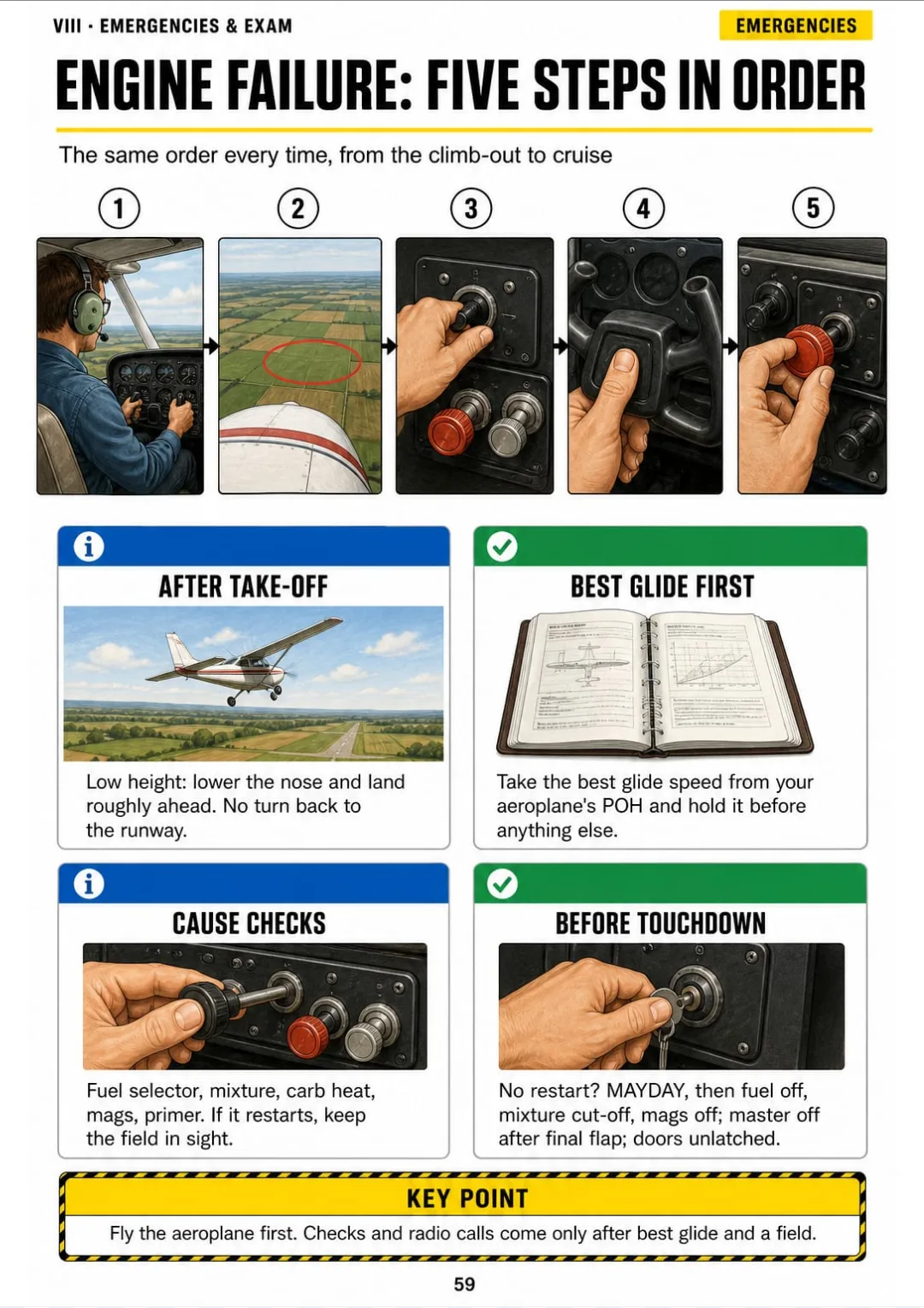
These are real pages from the book. The table of contents is the full one: 8 parts and 60 topics.
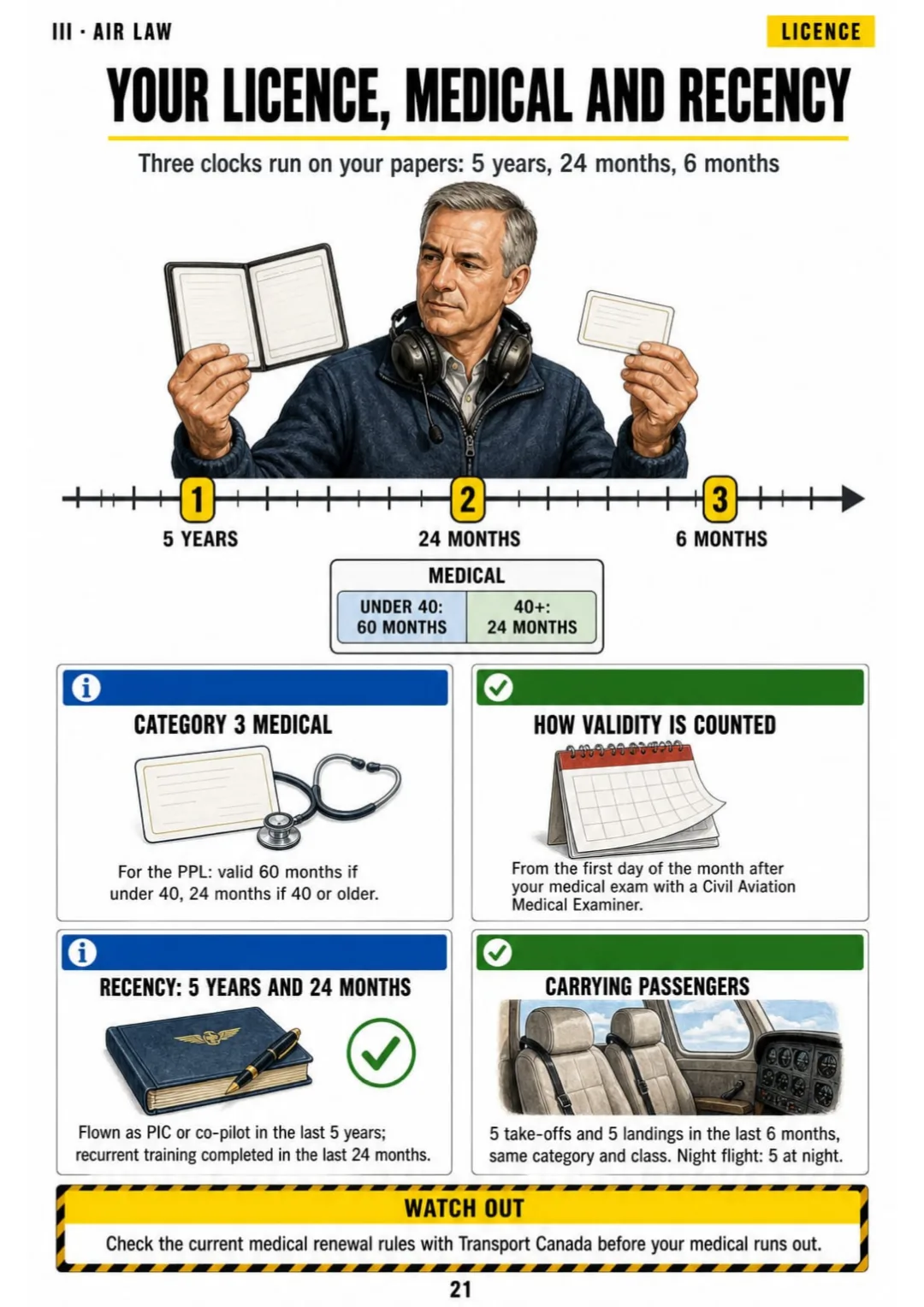
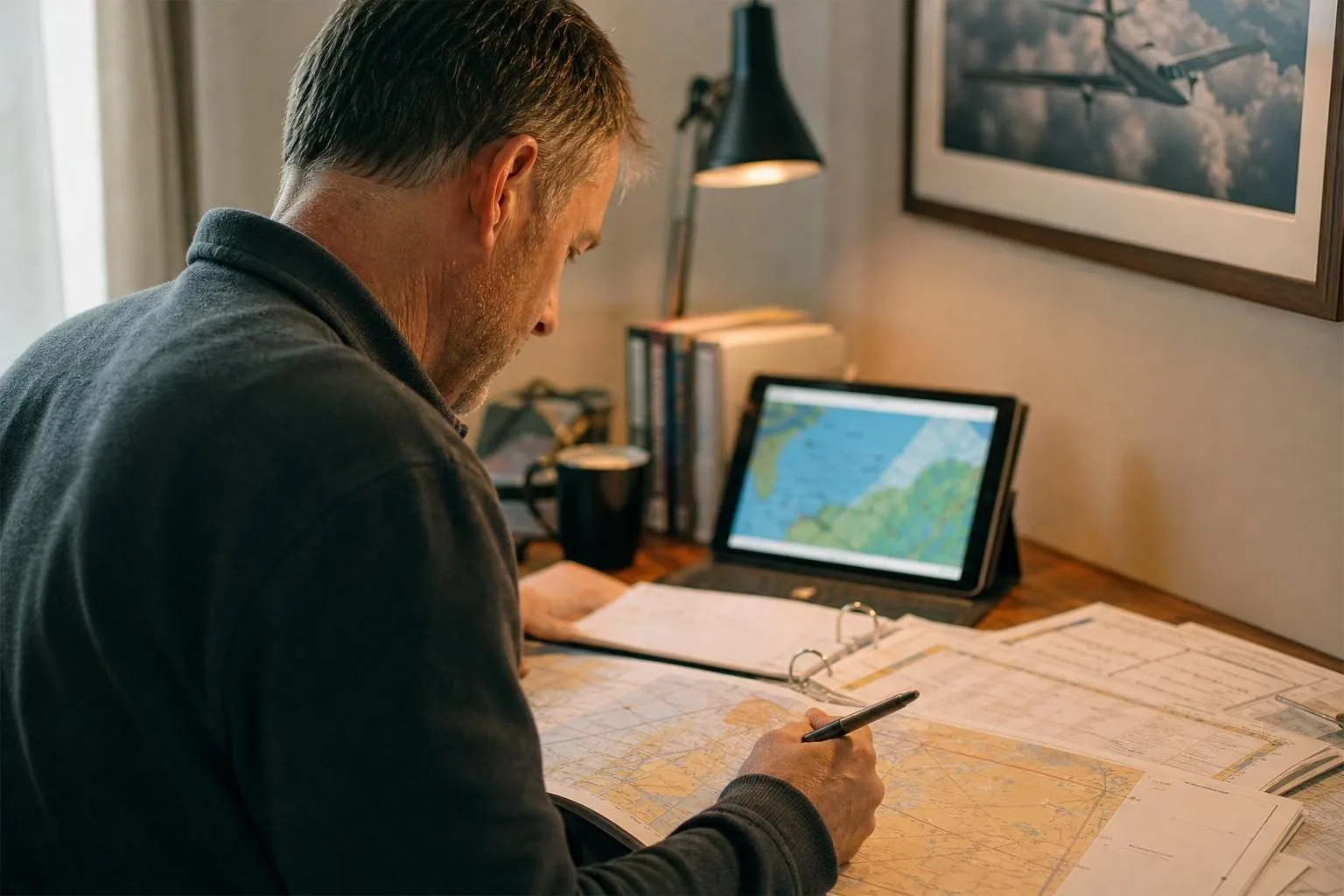
You're at the kitchen table with the air law chapter open, and last Saturday's question from your instructor is still on your mind: how long is your medical valid, and what do you need before you can carry a passenger?
It's all in the manual, but it comes in paragraphs. Validity periods, age brackets and recency rules, all in the same grey type, one after the other. Close the book and the numbers blur together.

In this book, that topic is one page. Two columns for the medical: 60 months under 40, 24 months at 40 and over. Beside them, the passenger rule drawn as a calendar: 5 take-offs and landings in the last 6 months.
Everything else works the same way. Right of way, VFR weather minima, airspace classes A to G, the standard circuit and the wind triangle: each one has its own page.
So when the question comes up in the briefing, you picture the page and you answer. No digging back through the manual to find it.

How the aeroplane flies, engine and instruments, air law and airspace, radio and aerodromes, weather, navigation, human factors, and emergencies and exam review: 64 pages, all illustrated
Think of it this way:
It's the night before your first solo cross-country. The forecast winds are out, and before bed you need a heading, a groundspeed and a fuel figure.
You open the wind triangle page. The three vectors are drawn, labelled and numbered in order, with a worked example in knots and nautical miles right beside them.

Density altitude, weight and balance, reading a Canadian METAR, joining the circuit at an uncontrolled aerodrome: it's the same for all of them. Each one has its own page.
Private Pilot Theory Illustrated has 8 parts and 60 topics, all drawn, and it ends with an exam map, a formula sheet and a night-before checklist.
What you see drawn, you don't have to memorize.
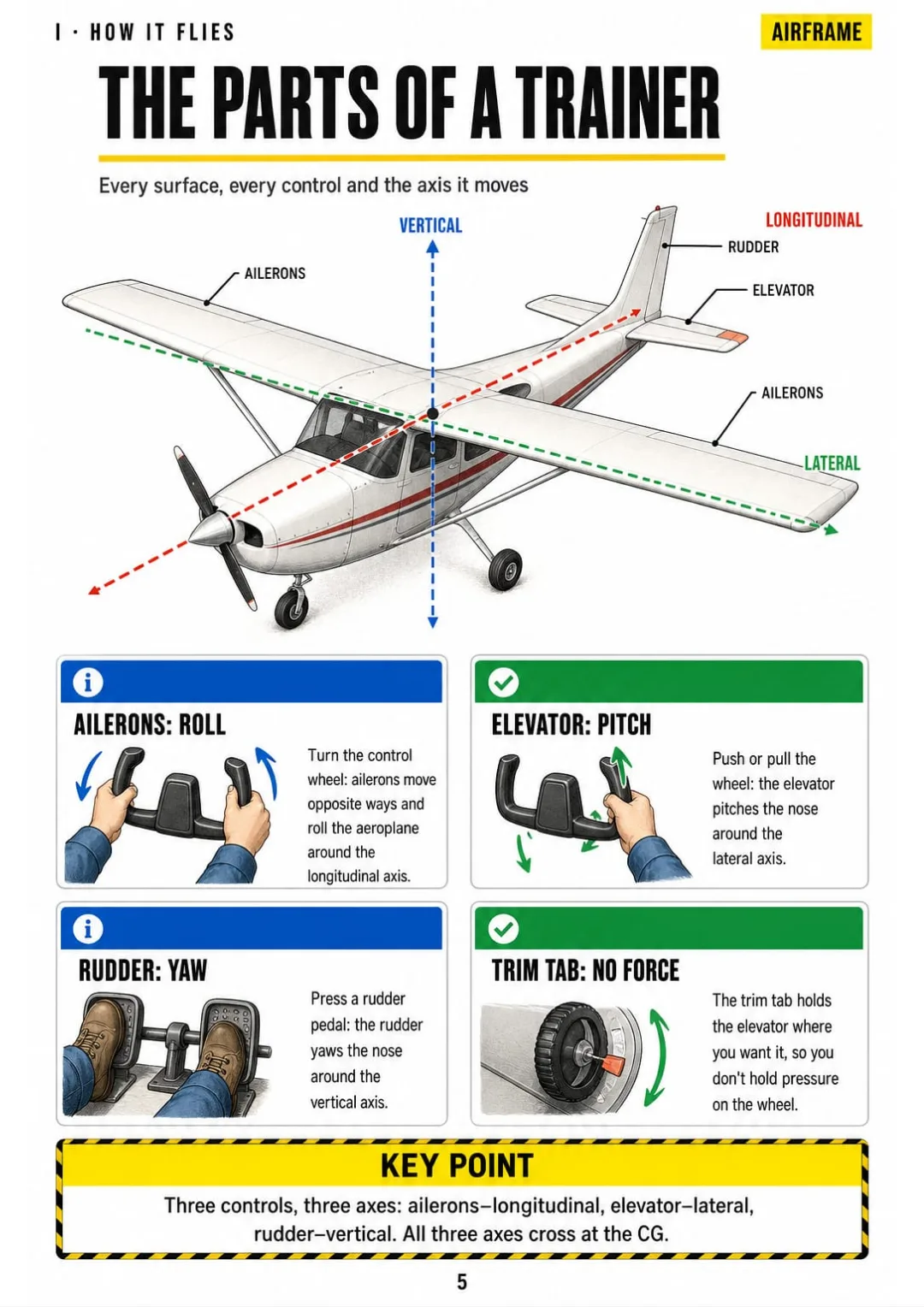
The parts of a trainer, the four forces, lift, the stall, drag, turns and load factor, stability, left-turning tendencies and spins
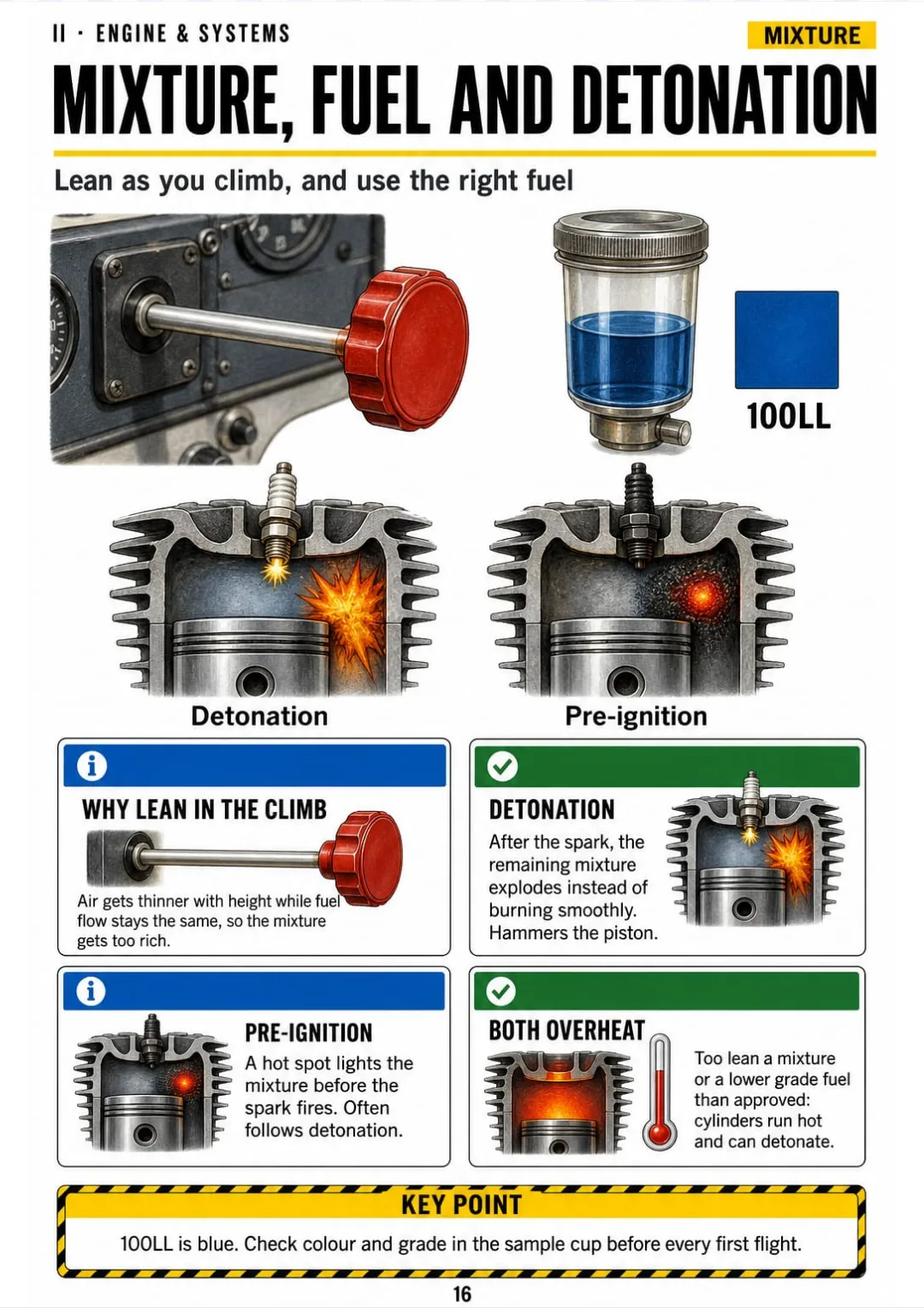
The four-stroke engine, magnetos and the run-up, carb icing, mixture and fuel, aircraft systems, the pitot-static instruments, V-speeds, the altimeter, gyros and the compass
Every number in air law on its own page, so it stops blurring: licence, medical and recency, documents on board, fitness to fly, right of way, minimum altitudes, VFR minima, cruising altitudes, fuel reserves and Canadian airspace classes A to G
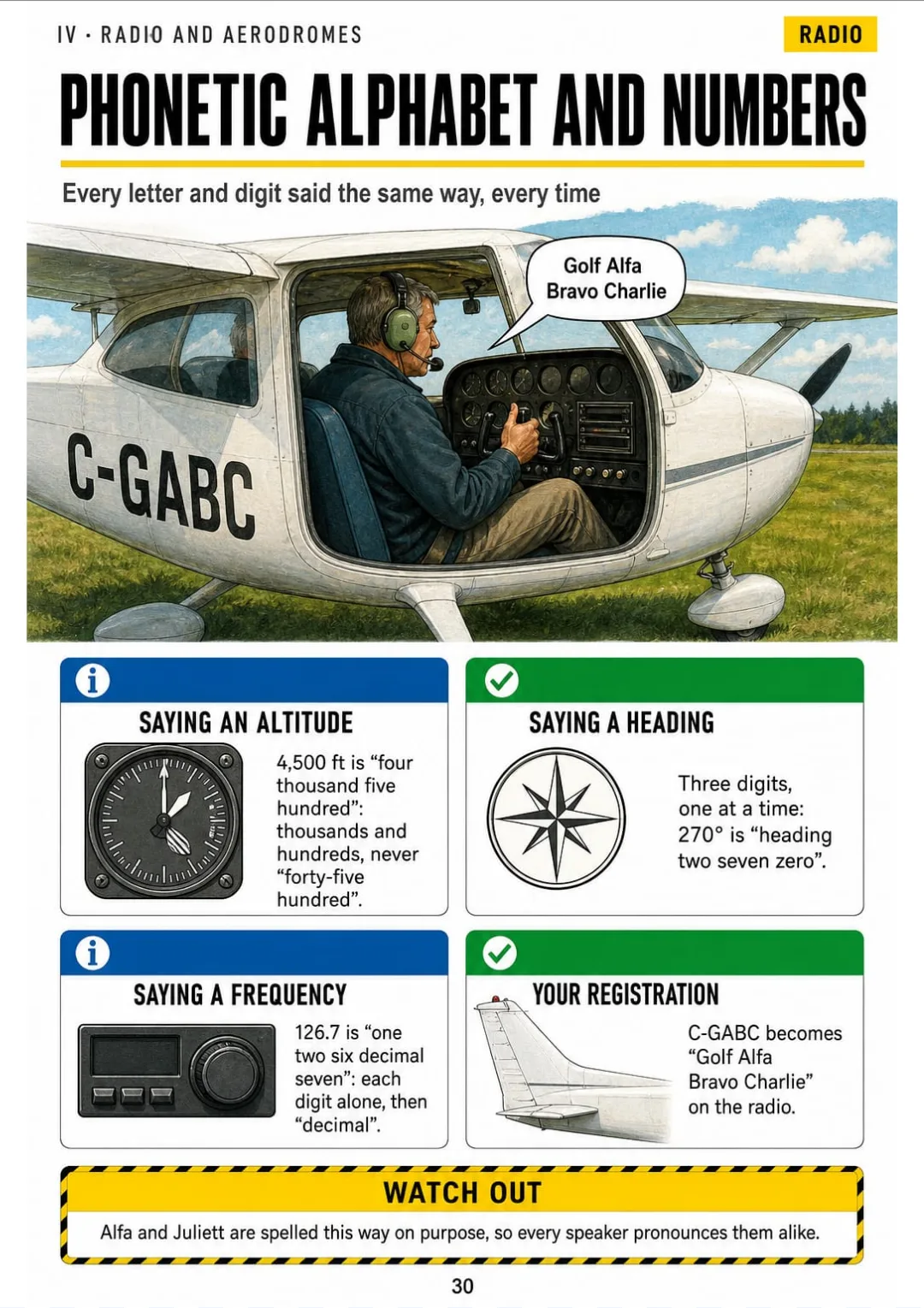
The phonetic alphabet, how every radio call is built, the standard circuit, joining at uncontrolled aerodromes, ATIS, light signals and emergency squawk codes
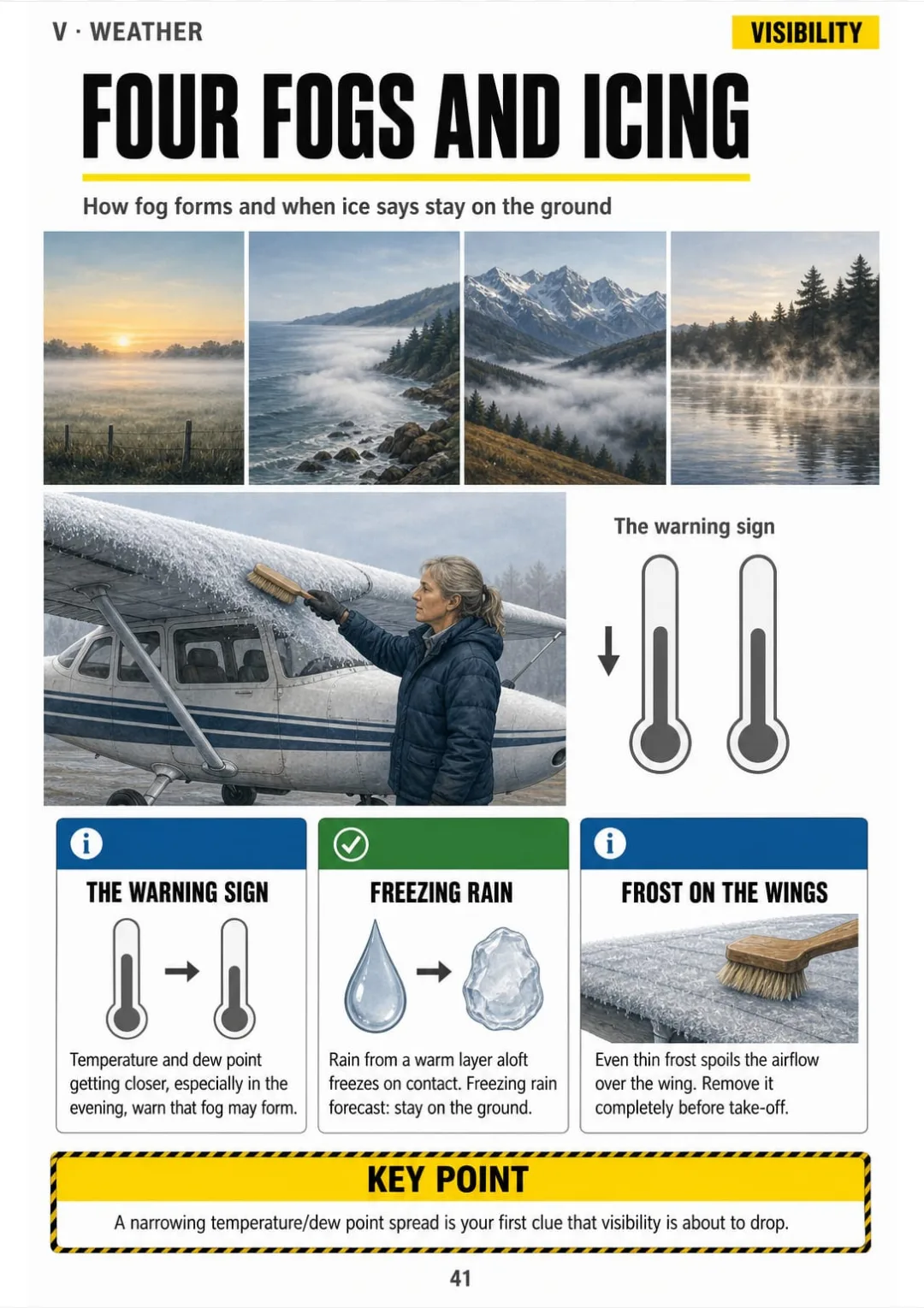
Read a Canadian METAR, TAF and GFA line by line instead of guessing: the standard atmosphere, pressure and wind, clouds, fronts, thunderstorms, fog and icing, winds aloft, PIREPs and SIGMETs
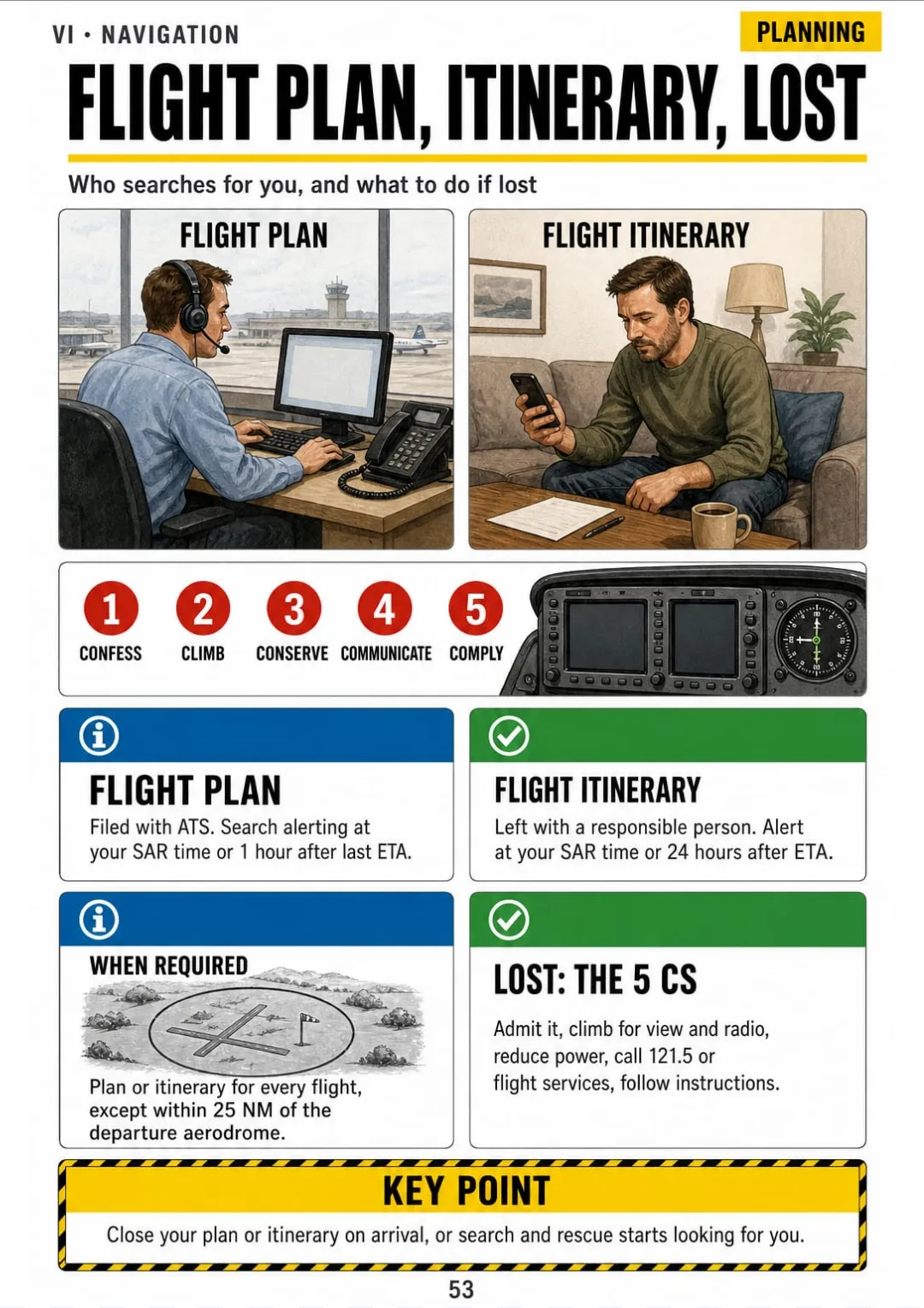
Latitude and longitude, VNC and VTA charts, headings, the wind triangle, time, speed, distance and fuel, weight and balance, density altitude, the nav log and the lost procedure
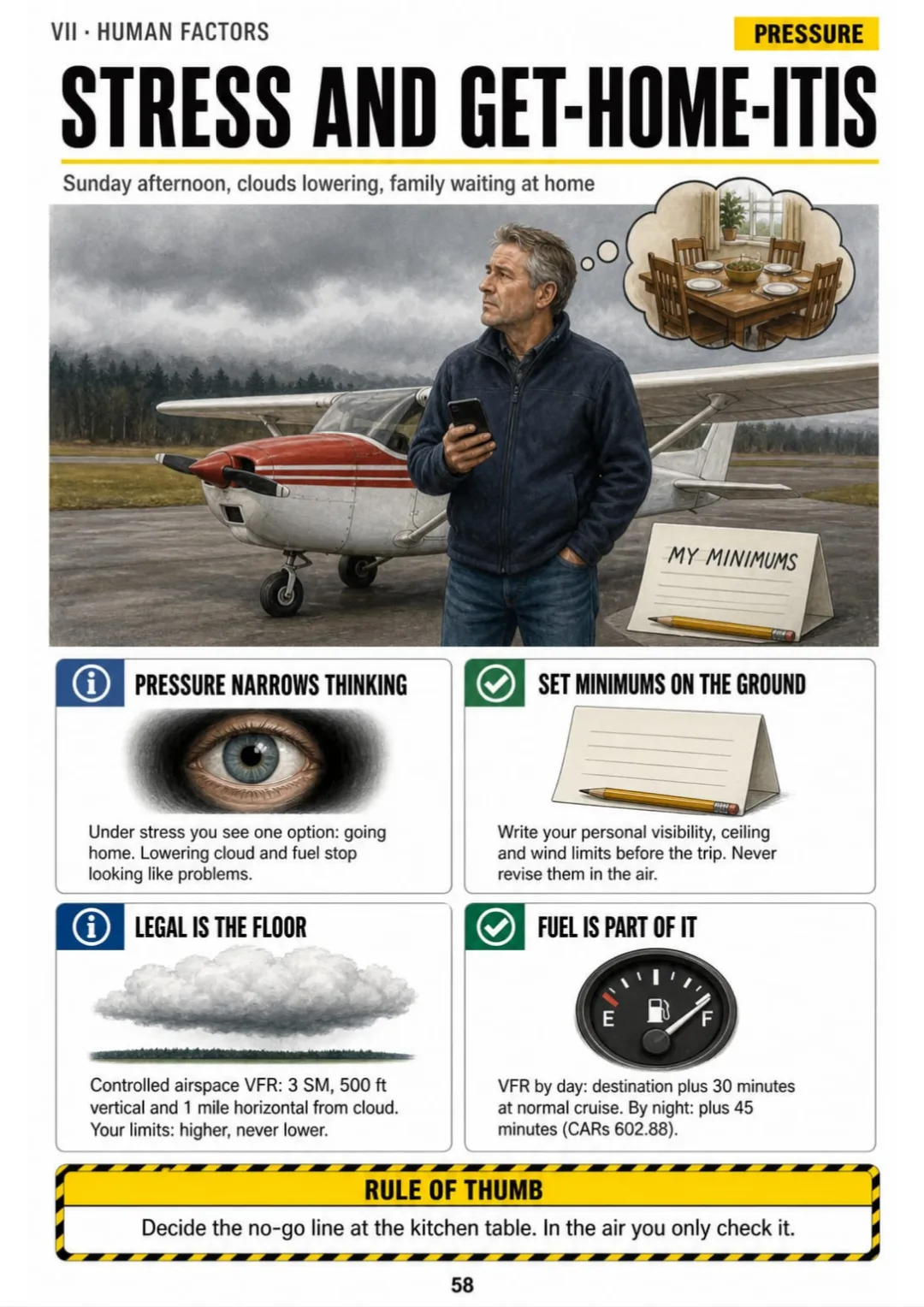
I'M SAFE, hypoxia, spatial disorientation, decision making, hazardous attitudes, stress and get-home-itis
Engine failure, the forced and precautionary approach, the written exam map, the formula sheet, common mistakes on worked problems and the night-before checklist
At the end of the book: A written exam map, a formula and numbers sheet, the most common mistakes on worked problems and a night-before checklist.
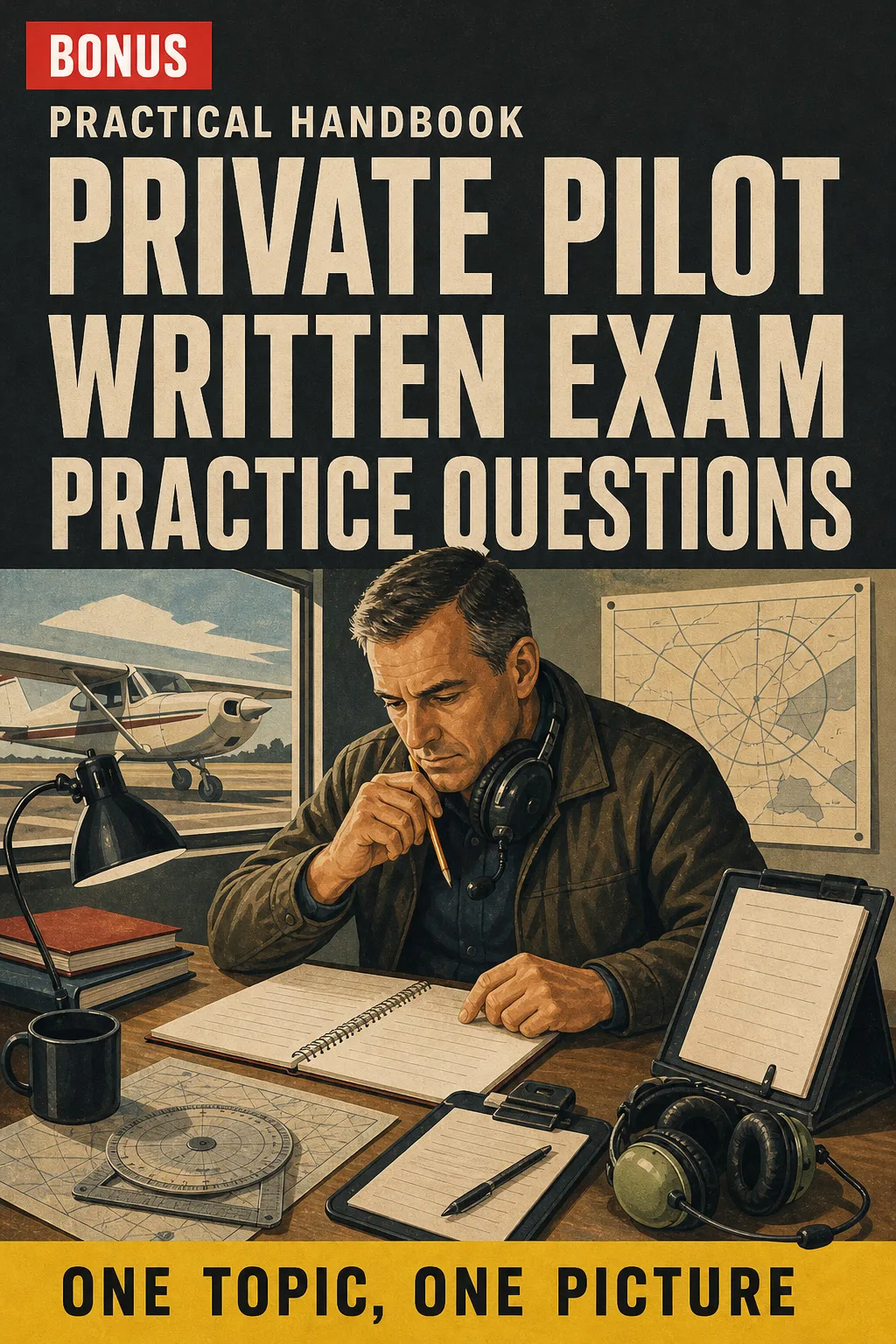
Exam-style questions sorted by section (air law, navigation, meteorology, aeronautics), each with the answer explained, so you find your weak spots before exam day.

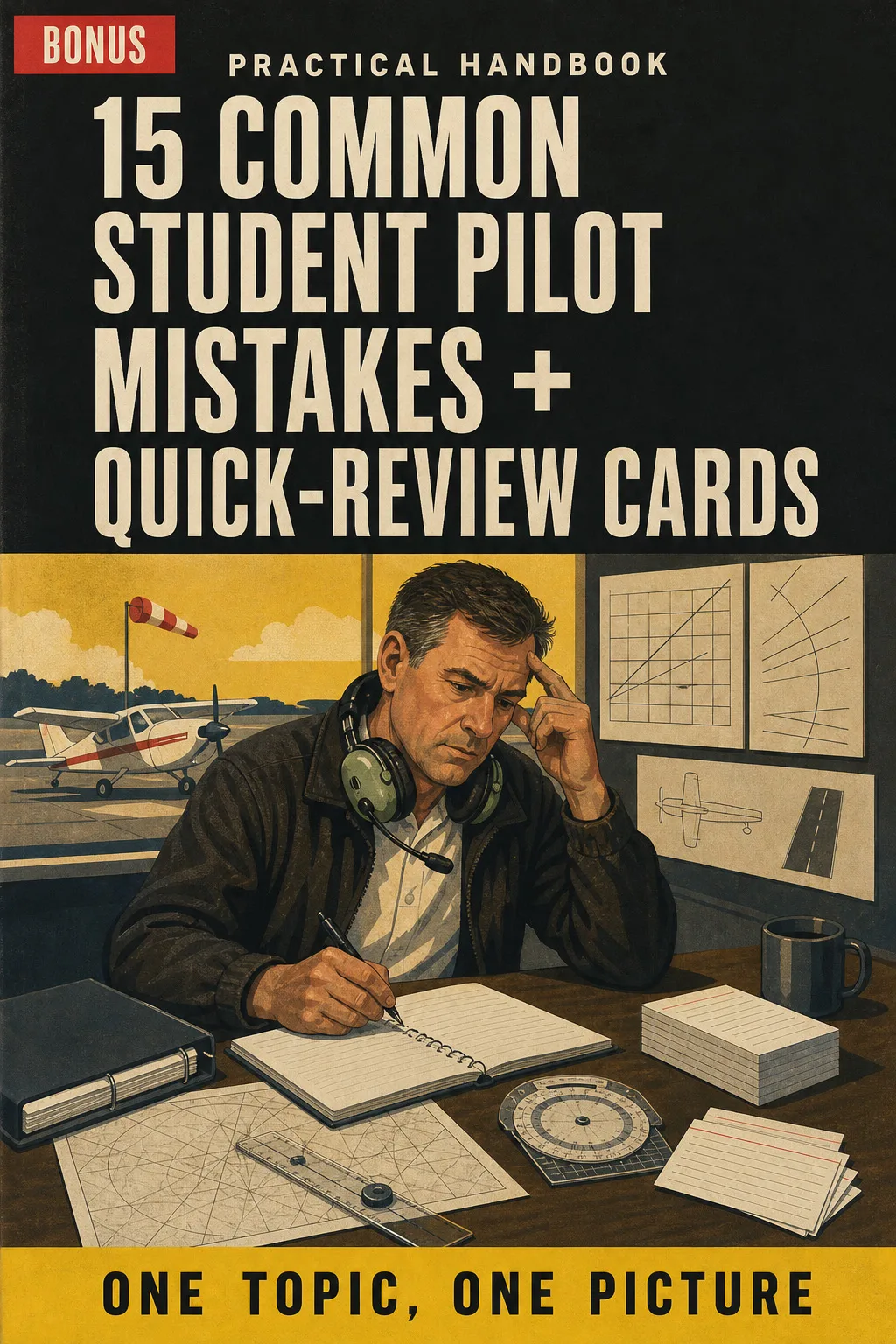
The most common mistakes shown before and after, plus one-page review cards you can print and go over the night before a flight or the exam.
📄 This is a digital PDF book sent to your email: nothing is printed or shipped.
PDF by email: We email you Private Pilot Theory Illustrated as a PDF, together with the two free books. It's a single payment: no installments, no extra charges.
Each evening's topic sits on one page, with the drawing first. You go over it in ten minutes and it's still there the next morning.
The exam map lays out the four subject areas of the written exam: air law, navigation, meteorology and aeronautics general knowledge. With the formula sheet and the practice questions, you see where you're weak and what to go over before exam day.
Print the circuit, the radio call and the engine failure pages and go over them before you drive to the airport.
📄 This is a digital PDF book sent to your email: nothing is printed or shipped.
Try Private Pilot Theory Illustrated for 30 days, bonus books included.
We refund everything if the file won't open, if the book isn't what you see here, if you were charged twice or if the email doesn't arrive. Just email us.
You pay once. No subscriptions.
Yes. Every topic starts from the drawing and moves to the numbers, in short sentences. You don't need any background, just the will to fly.
It's checked against the current editions of Transport Canada's PPL study guide (TP 13723), the Canadian Aviation Regulations and the TC AIM. It covers Canadian rules, Canadian airspace, Canadian METARs, TAFs and GFAs, and Canadian units: knots, nautical miles, feet, inHg and °C. It isn't an FAA book. The TC AIM is updated twice a year, so always confirm a rule against the current edition.
No. It's an independent study book. It isn't affiliated with, approved or endorsed by Transport Canada or NAV CANADA. It doesn't give you a certificate and doesn't count as ground school hours: it's for understanding and going over what you study.
No. It doesn't replace your ground school, your flight instructor or your aeroplane's flight manual. It's there to help you understand and go over what you study.
No. They're written for this book in the style of the exam, so you can check what you know. They aren't real exam questions.
The book and the 2 bonus books arrive as PDFs by email, at the address you enter at checkout. If you don't see it, check your spam folder. The PDFs open on your phone, tablet or computer, and you can print them.
No. It's a one-time payment, with no subscription.
Yes. The PDF is printable, so you can print the whole book or only the pages you want in your flight bag.
You have 30 days. We refund everything if the file won't open, if the book isn't what you see on this page, if you were charged twice or if the email doesn't arrive: just email us.
No more rereading with nothing sticking.
The wind triangle, drawn out and done.
You walk into the written exam knowing where everything is.
Drawings make studying faster.
The book is right below.
One-time payment: US$ 27 · Guarantee: 30 days · PDF by email
YES, I WANT PRIVATE PILOT THEORY ILLUSTRATED FOR US$ 27📄 This is a digital PDF book sent to your email: nothing is printed or shipped.